Picking a city to launch a food truck usually starts with “where would it be fun to live?” and ends with “why does this permit page read like it was written by a committee of bored wizards?”
Luckily, Food Liability Insurance Program (FLIP) recently published the Best Cities for Starting a Food Truck: Full 2026 Report, analyzing 200 of the largest U.S. metro areas to identify where new operators may have the strongest runway.
The report’s rankings are built around five signals tied to real-world viability:
- Walkability (20%)
- Adjusted weekly wages (15%)
- Search interest (25%)
- Job saturation using employment location quotient, or ELQ (15%)
- Recreation GDP growth (25%)
Read on for the key takeaways and details on some of the top metro areas for food truck success.
The Five Signals That Separate Demand From Hype
FLIP examines these key areas to answer your burning questions about where to set up shop.
1) Search Interest: Are People Actively Looking?
The report uses monthly searches for “food trucks near me” as an indicator of customer intent. It’s not a perfect measure, but it’s a solid pulse check of real demand. Austin (2,400 searches) and Houston (1,900) stand out, which helps explain why they can compete with (or beat) cities with stronger walkability.
2) Recreation GDP Growth: How Is the Local Economy Expanding?
Food trucks thrive where people gather. To capture that momentum, the report examines metro-level GDP growth in arts, entertainment, recreation, accommodation, and food services.
That aligns with how the Bureau of Economic Analysis tracks outdoor recreation and related activity, which can help you determine whether a market’s event and leisure economy is heating up or slowing down.
3) Walkability: Is There Built-In Foot Traffic?
Walkability is the difference between being part of someone’s normal route and needing to work harder to get discovered. Research consistently links walkable environments to stronger nearby commercial outcomes. For a deeper dive, this Transportation Research study on walkable environments and commercial vitality is a useful reference.
4) Adjusted Wages: How Much Can You Earn?
Cost-of-living adjusted wages offer a clearer picture of local spending power. New York leads the top 10 with an adjusted weekly wage of $785, while Miami is close behind at $741. In markets where residents have more disposable income, impulse buys, add-ons, and repeat visits tend to come more easily.
5) Job Saturation: Is There Room for Another Food Truck?
Employment location quotient (ELQ) estimates how concentrated mobile food service jobs are in a metro area compared to the national average. In the report’s scoring, a lower ELQ ranks better because it can suggest less crowding. Translation: fewer operators competing for the same lunch rush.
The Top Cities and Why They Rank
New York, NY (#1): Density Wins, Even When Permits Are Complex
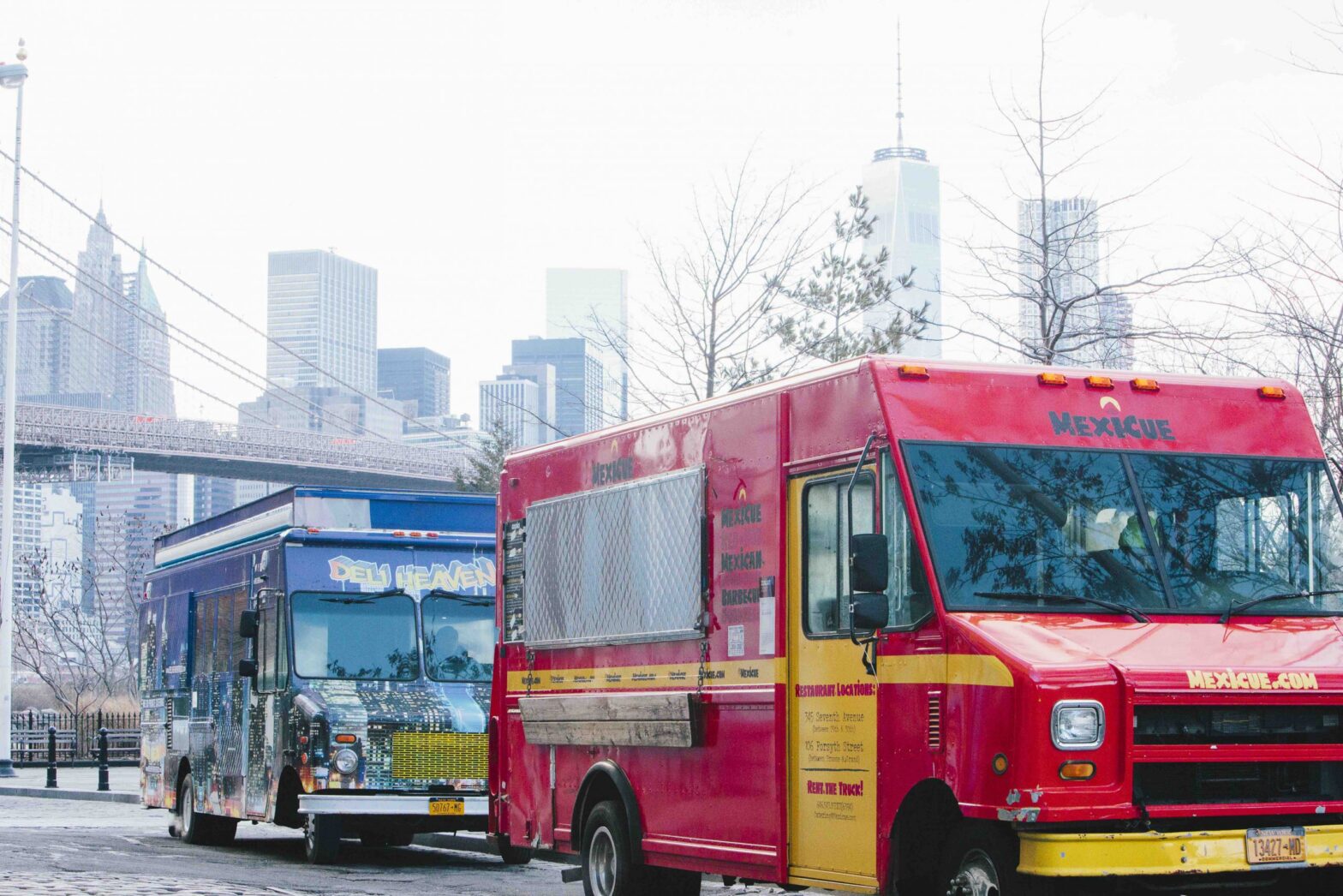
New York tops the list thanks to a rare combo of high walkability (88), strong search interest (1,600), and top earning power ($785 adjusted weekly wage). Permitting can be challenging, but density creates a built-in advantage: more pedestrians, more office clusters, more events, and more opportunities to find a reliable route that works.
Austin, TX (#2): Culture Outweighs Saturation
Austin ranks #2 overall despite a walkability score of 42, powered by huge search interest (2,400) and solid recreation GDP growth (17.7%). The big takeaway: when food trucks are already a go-to option, new operators don’t have to spend the first year convincing people to try the concept. They can focus on brand, menu, and routes sooner.
Los Angeles, CA (#3): Competitive, But Supported
Los Angeles lands #3 with a walkability score of 69 and 1,300 searches. The market is crowded, but there’s also meaningful support infrastructure. Harvard’s Data-Smart case study on food truck regulation highlights how cities that reduce friction and modernize rules can help small businesses compete.
Washington, D.C. (#6) and Honolulu, HI (#7): Growth With Strong Event Demand
D.C. pairs strong walkability (77) with recreation GDP growth (19.85%), and benefits from being an event-heavy market where gatherings are part of the local rhythm. Honolulu is the standout growth story in the top 10, leading with 24.45% recreation GDP growth.
In places where the experience economy is expanding, trucks tend to have more chances at steady revenue through events, tourism corridors, and high-traffic hubs.
Boston, MA (#8) and Denver, CO (#10): Strong Fundamentals, Improving Conditions
Boston scores well on walkability (83) and avoids extreme saturation compared to many large metros. Denver is a market to watch thanks to recreation GDP growth (20.2%) and signs that broader operational friction is easing, which matters for trucks that move across jurisdictions.
Expert Reality Check: Food Truck Scenes Are Built, Not Born
Data helps, but it doesn’t replace lived experience. The report included expert input from leaders across the space, including Tyler Kalin, Senior Manager, Marketplace at Mobile Food Alliance, who pointed to the challenge of inconsistent rules and the value of clearer standards for operators.
That perspective matches what policy research has been saying for years: regulations can either support small business growth or quietly make it harder than it needs to be.
One Factor That Still Matters Everywhere: Food Liability Insurance
No city, not even the “perfect” one, eliminates risk. Customers can get sick. A venue may require proof of coverage before you can park. A single incident can create a big financial setback if you’re not protected.
That’s why many food truck owners treat food truck insurance as part of the basic startup toolkit, right alongside permits, a commissary plan, and a menu that holds up under pressure.
The Takeaway
The report’s top cities aren’t perfect, but they do score well on the factors that tend to move the needle: measurable demand, foot traffic, earning power, manageable competition, and an experience economy with momentum.
Use the rankings to narrow your shortlist, then pressure-test each option with local realities like commissary rules, vending zones, enforcement patterns, and event calendars. The best city for your food truck is the one where customers can find you, afford you, and where the rules are clear enough to build a real routine.